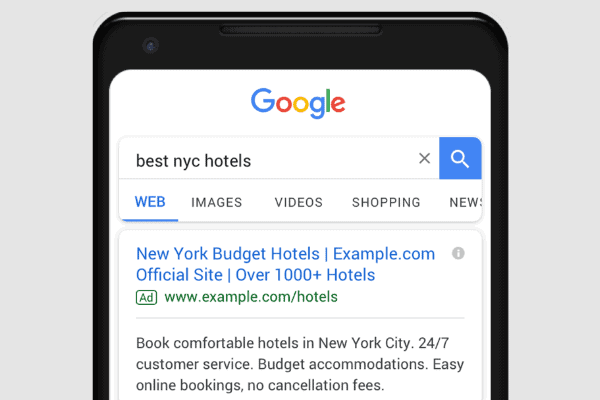
The most important element in paid search advertising—besides keywords—is creative and having great ad copy is one of the main factors in achieving success with the channel.
Even though someone who just searched a brand’s most relevant keywords can be targeted, it’s really the job of the paid search ad to pique the interest of the user and entice him or her to click. And, especially for low-volume keywords that tend to drive valuable, high-converting traffic to a website, getting just an extra click here or there from really great ads can add up across thousands of keywords.
The problem is, writing and testing ad copy to find the very best combinations of headlines and descriptions can be challenging and time-consuming.
However, with Microsoft Advertising’s new Responsive Search Ads, marketers now have help to come up with the very best paid search creative.

Responsive Search Ads save marketers time
With Responsive Search Ads, marketers can input up to 15 headlines and 4 descriptions that will be mixed and matched based on performance by AI from Microsoft Advertising. Headlines and descriptions can appear in any order unless the practitioner uses the pinning function to lock the header or description to a specific position.
How many potential versions can be generated from 15 headlines and 4 descriptions? One responsive search ad can generate more than 32,000 ad combinations! Often, search marketers use spreadsheet hacks to virtually do the same thing by hand—so this tool makes this process smoother, cleaner, and faster.
And, according to Microsoft Advertising, Responsive Search Ads improve ad performance and “drive higher click-through rates (CTRs) and conversion rates (CVRs) due to the improved ad space, higher volume, and effectiveness.”
As an added bonus, the tool also offers an ad strength feature which analyzes your inputs and provides recommendations on how to better create your ad.

Best practices for Responsive Search Ads
Microsoft offers the following suggestions for marketers using this new option:
- “Create responsive search ads in the same campaigns with your current expanded text ads to avoid impression and click loss when testing the effectiveness of responsive search ads.
- Take advantage of the additional headline limits and provide at least 8-10 unique headlines that don’t contain similar phrases and at least two distinct descriptions with a clear call-to-action message.
- Constantly review responsive search ads via performance results in the combination report page.
- Headlines and descriptions can appear in any order unless you pin a header or description to a specific position. The second description and third headline are optional and might not be displayed in cases where ads won’t fit on a specific device. We don’t recommend that you use pinning unless you need to show specific content every time. In that case, pin to positions 1 or 2 for headlines and position 1 for descriptions.”
The next era of search engine marketing
“Responsive Search Ads are a great example of where paid search advertising is headed,” says Skai’s GM of Search, Kate Dubois. “The future of marketing is to marry the very best things that people are good at—writing compelling ad elements—and what computers are good at—generating many iterations from human inputs—to save time, increase engagement, and ultimately drive more return on advertising investment.”